The Scoop on Poop: What’s Normal and What’s Not – Serenity Kids
The Scoop on Poop: What’s Normal and What’s Not for Your Toddler?
Estimated time to read 9 minutes
When you became a parent, you probably knew you’d have a lot of change in your life, but did you ever think that poop would be so front of mind - all the time?
The frequency, the texture, the color, how it looks, how it smells? Is it normal? Are they sick? Is it happening enough or too much?
We could probably all use a parenting class on poop, so let’s use this article as the next best thing. We’ll discuss poop in all its parenting glory, and specifically how what your little one is eating might affect what comes out the other end.
The discussion focuses on toddlers today - little ones aged anywhere from 1-4. At this age range, they may still drink breast milk or formula, but they are all eating table foods (even if they’re a little picky about them!).
What’s Normal?
So what is “normal” in terms of toddler poop? Like most things - there’s a range!
Frequency
Your toddler may poop anywhere from 1 to 3 times per day. This often trends closer to the high end of the range if your little one is still drinking breast milk or formula, and toward the low end if your little one is exclusively eating solids. But if your toddler goes a day or two without pooping, there’s no need to panic. Like adults, a variety of things can slow digestion temporarily, like hydration or stress.
Consistency
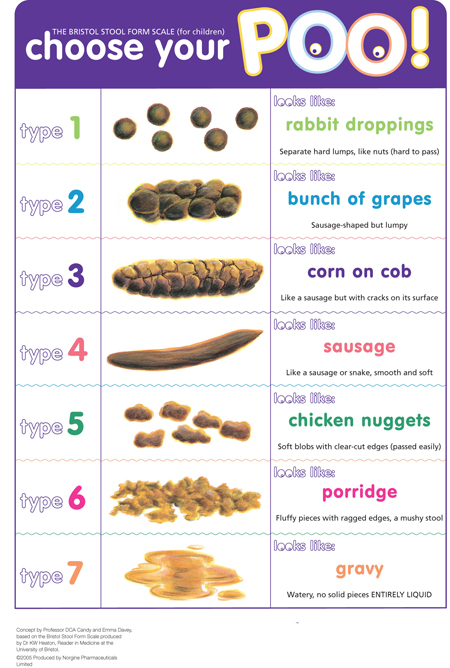
Many argue that consistency is more important than frequency. Toddler stools should be soft, but with some shape. Again, younger toddlers who are still taking in breast milk will likely have softer stools, whereas toddlers eating exclusively solids will likely have more solid and shaped stools. While consistency can be harder to identify if your little one is still in diapers, you’re ideally looking for a 3 or 4 on the Bristol Stool Form Scale.
Poop Problems
And of course, poop can come with problems - generally in the form of constipation and diarrhea. Here’s more on each of those joys:
Constipation
Just because your toddler goes a few days without pooping doesn’t mean they’re constipated. Even if your toddler skips a day or two doesn’t necessarily a sign that he or she is backed up, as long as when he or she does poop, it comes out looking normal. A true sign that your little one is constipated, however, is when he or she produces small, round, hard stools (a 1 or 2 on the Bristol Stool Chart).
Face scrunching, grunting, and straining while pushing out that poop can be a sign your child is blocked up, but again it goes back to consistency. If the poop is hard and in small pieces when it comes out after straining, it is a sign of constipation. If the poop is still relatively soft and shaped when it comes out, the sounds and faces are likely just your kiddo gaining awareness around the process of pooping and learning the sensations that it involves.
Why it happens
So why do kids get constipated? When it comes to nutrition, there are typically three reasons:
- Not enough fiber
- Not enough fluids
- Too much dairy
Why do fiber and fluids influence the quality and frequency of poop? Well, the colon absorbs water while it makes stool. If food moves through the colon at a healthy pace, it’ll absorb just enough water to produce a stool that is an ideal consistency. However, if the stool doesn’t have enough bulk, which it gets from fiber, it will move through the colon more slowly, giving the intestines more time to absorb more water from it, making it harder and more dry and difficult to pass. In addition, if the body doesn’t have enough water in the first place, the colon can still take water, leaving the stool with less, and causing slow passage and a harder, drier stool.
While you might view milk as another way to stay hydrated, it can actually be quite constipating for many little ones. General recommendations are to cap milk consumption at 24 ounces per day for toddlers under age two and 16 ounces for toddlers over age two. However, if your toddler is also eating a lot of other dairy products, like cheese or yogurt, and experiencing constipation, you may want to consider replacing some milk with water to see if it helps get things moving. In addition, since research has shown that constipation happens more frequently with the widely-used A1 milk than with A2 milk, consider switching to A2 milk to see if constipation symptoms subside.
Other non-food related factors that can influence bowel movements include exercise and stress. Just as in adults, too little movement and too much stress can slow digestion. You might not think of these factors as relevant to toddlers, but they absolutely are. Even something like a long car trip where your kiddo is stuck in a car seat and driving to an unfamiliar place can trigger enough stress and inhibit movement enough to interfere with their digestion and put a pause on poop.
What to do about it
To help get things moving for your toddler, try these tactics:
- Offer Fiber: Offer high-fiber foods like berries, vegetables, avocado, and flax or chia seed. Smoothies are a great way to get these foods into more particular eaters.
- Offer P-Fruits: Offer prunes and pears (leave the skin on for added fiber!) which are commonly used to get things moving. And prunes aren’t just an old wives tale - they have been studied for their benefits to alleviating constipation. If your little one resists, try spreading a bit of nut or seed butter on pear, or use some coconut yogurt for a dipping sauce.
- Hydrate: Encourage your toddler to drink water to help soften stools. Add a few pieces of fruit for fun, or let them help pick a new cup to get them invested in the habit.
- Consider Probiotics: Consider probiotic supplementation which research suggests may help support constipation by improving the gut microbiome environment and motility. However, note that certain species and strains have been shown effective for improving constipation while others show little benefit.
- Get Moving: Make sure they are getting regular movement, even if it’s just quick bursts as time and weather allows. Younger toddlers who aren’t yet walking get great movement from crawling and can practice walking along furniture to move. Older toddlers can join for short family walks after meals, use opportunities like errands to walk instead of being carried from the car to the store, and enjoy plenty of outdoor and playground time when possible. Small indoor trampolines are a great way to get movement inside when the weather doesn’t cooperate.
When to worry
While an occasional stop up of toddler poop is no big deal (say, when taking vacation, or if something like teething causes food intake to vary for a week or two), chronic constipation can be painful and dangerous. It can affect your toddler’s digestion, eating habits, and sleep. If your little one is consistently passing small, hard stools, especially if only three times per week or less, it’s time to amp up the fluids and fiber and reach out to your toddler’s health care provider.
If your toddler develops any of the other symptoms listed below, reach out to their health care provider for advice:
- Develops anal fissures (cracks or tears in the skin near the anus)
- Has blood in stool
- Looks or acts sick
- Leaks stool
- Vomits
- Has a fever
- Refuses to eat
- Has a swollen belly
Diarrhea
Equally as unfortunate and frustrating, but in a different way, is when your little one is going too frequently, or is having loose or runny stools. Here’s why it can happen, what to do about it, and when to worry (and call your child’s healthcare provider).
Why it happens
- Food intolerance: Different from a food allergy, a food intolerance is an adverse reaction to a food that is typically caused by a limited ability or an inability to digest or absorb certain foods or their components. Food intolerance symptoms can present anywhere from 3 to 48 hours after eating the food and often include nausea, bloating, abdominal pain, and diarrhea. Two of the most common include gluten and dairy. However, dairy intolerance is often mistaken for an intolerance only to the common A1 protein found in most dairy products.
- Too much fruit: Too much fruit or fruit juice, especially those that are high in fructose and sorbitol like apple juice and pears, can cause frequent and loose stools.
- Illness: Stomach bugs and other viruses or bacteria can temporarily cause episodes of diarrhea. These are typically more intense, but short lived.
- Antibiotics: Diarrhea and loose stools are a common side effect of many antibiotics.
What to do about it
Unfortunately, most toddlers will experience diarrhea at some point, so here’s how you can help manage their comfort and prevent further complications:
- Hydrate: Staying hydrated is key. If you are still breastfeeding, offer your toddler breast milk which will both hydrate and nourish. If not, offer water or an electrolyte beverage. Skip the store bought options with artificial dyes and high fructose corn syrup.
- Eliminate aggravating foods: If you suspect a dairy intolerance in your little one, try switching to A2 milk to see if symptoms subside. If other intolerances are suspected, try removing the suspected food or foods for 4-6 weeks and then reintroduce foods slowly one at a time and observe reactions.
- Consider a probiotic: Probiotics can help with diarrhea too. Lactobacillus rhamnosus GG has been repeatedly studied for its benefits in both infection-related diarrhea and antibiotic-associated diarrhea.
- Protect the bum: Frequent pooping can irritate the bum and cause more discomfort than diarrhea alone. If in diapers, change often and gently pat the area with a soft wipe. Apply diaper cream each time.
- Bone broth: Bone broth can provide both hydration and helps replace electrolytes lost from repeated bouts of diarrhea. If your toddler won’t drink it alone, try using it in a soup or stew.
When to worry
If the diarrhea becomes excessive in frequency or amount, or if your toddler shows any of the following symptoms, reach out to their healthcare provider for support:
- Blood or mucus in stools
- Fever
- Vomiting
- Irritability
- Refusal to eat
- Decreased or dark-colored urine
- Decreased activity or lethargy
- Signs of dehydration (fewer wet diapers, dry eyes when crying, sunken eyes, or the soft spot on top of her head appears sunken)
- Labored breathing
Poop Happens
Poop problems are no fun, and when it comes to kids, they’re inevitable. But fortunately, when armed with a bit more information on their root causes and treatments, you can feel empowered to handle them head on!
Bio
Hillary Bennetts is a nutritionist and business consultant focusing on health for mamas and babies through the prenatal, postpartum, and infant/toddler stages. Hillary holds a Bachelors in Economics and an MBA, and is certified as a Holistic Nutritionist through Bauman College. She lives in Colorado with her husband and toddler son, with another baby boy on the way in September 2021.
Website - www.hillarybennetts.com Instagram - @hillarybennetts
RESOURCES
1. https://nutritionj.biomedcentral.com/articles/10.1186/s12937-016-0147-z
2. https://pubmed.ncbi.nlm.nih.gov/24986816/
3. https://onlinelibrary.wiley.com/doi/full/10.1111/apt.12913
4. https://www.cambridge.org/core/journals/proceedings-of-the-nutrition-society/article/probiotics-and-constipation-mechanisms-of-action-evidence-for-effectiveness-and-utilisation-by-patients-and-healthcare-professionals/0D09EF3362228CB7C73224A123EA1FC0
5. https://www.ncbi.nlm.nih.gov/pmc/articles/PMC5408016/
6. https://academic.oup.com/ajcn/article/111/1/149/5644119
7. https://www.ncbi.nlm.nih.gov/pmc/articles/PMC4649266/
8. https://www.ncbi.nlm.nih.gov/pmc/articles/PMC5745464/